Thursday, 18 September 2014

Balloon Powered Cars

Balloon powered cars challenge

Using your prior knowledge on forces and your thinking interdependently expertise you are to design and build a balloon powered car.


Instructions

The kids were allowed to use a foam core or corrugated cardboard, regular cardboard, wooden barbeque skewers, straws, scissors, tape to build a balloon powered car.


Forces:
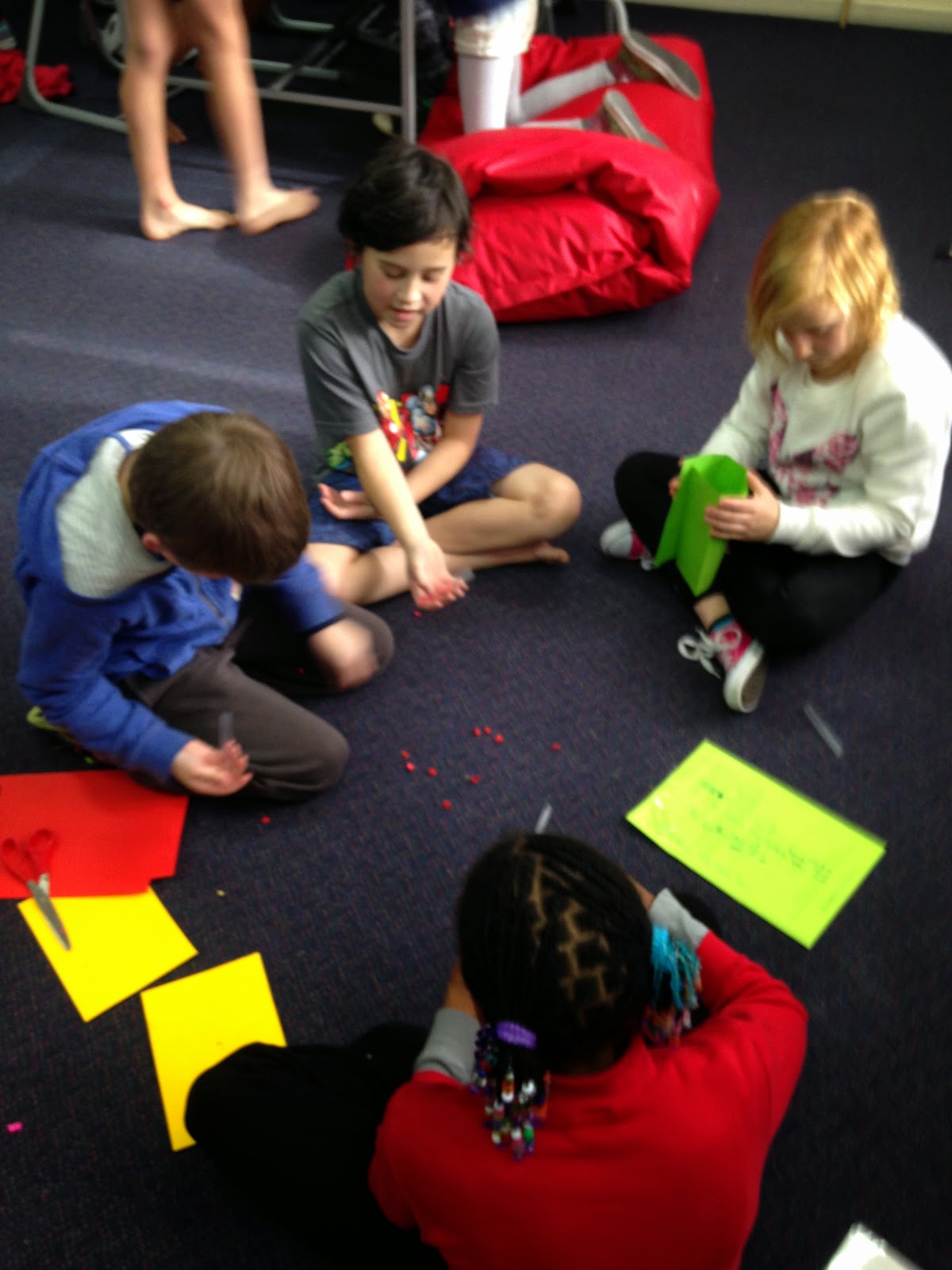
You must include the forces that you think will be acting upon your car in your plan.Then it was action time. The kids were put into groups of 3 to build the car. Here are some photos of the balloon powered cars in the making.


“Trying to make the cars was frustrating but in the end we got there and finished” - Jacob Dredge

"This is awesome" - Alex Manley

"I wonder if friction will impact on this challenge" - Meg (aka the mad scientist)

#wethinklikescientists

Monday, 25 August 2014

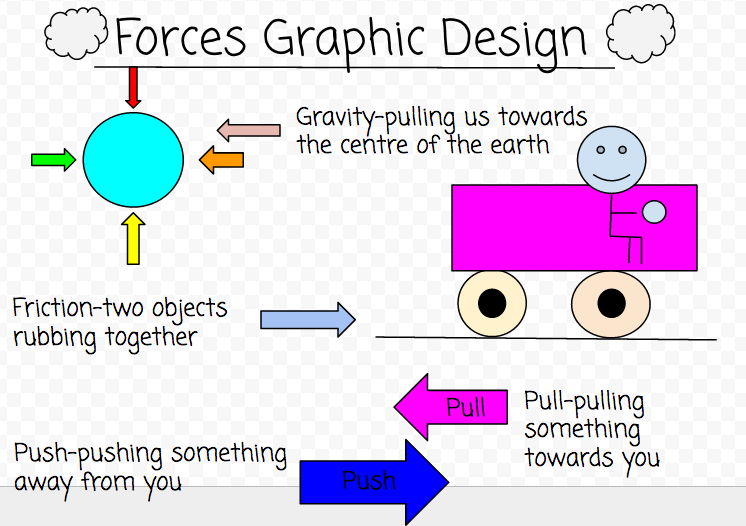
Forces Graphic Design

For Home Learning the children were set the task to create a graphic design explaining one of the forces we have looked at in class. The idea is to have the children communicate their prior knowledge and new learning in a range of different and creative ways.

The children have been enjoying demonstrating the different forces through a range of methods and it seems to be helping cement the kids learning of forces. Through readings, experiments completed in class and presenting their forces home learning the kids are processing their knowledge.


#wethinklikescientists


Tuesday, 19 August 2014

The Human Table Experiment


Miss Ross led Team Double R through the "Human Table" experiment. The children thoroughly enjoyed this activity and were able to apply their scientific knowledge about forces to explain how it works.


Miss R convinces the boys that the experiment is safe.


 Meg, Sinead, Alex and Ella B are relaxed before their big fall!


 The boys can't stop laughing as the last chair is removed.


Absolute chaos as our budding scientists carry out their "human table" experiments.


A small video showing Team Double R thinking like scientists.


#wethinklikescientists

Monday, 18 August 2014

Homemade Marble Run

To demonstrate the force of gravity the children completed the marble run experiment in class. The children were then set a home learning task to create a marble run out of recycled materials.


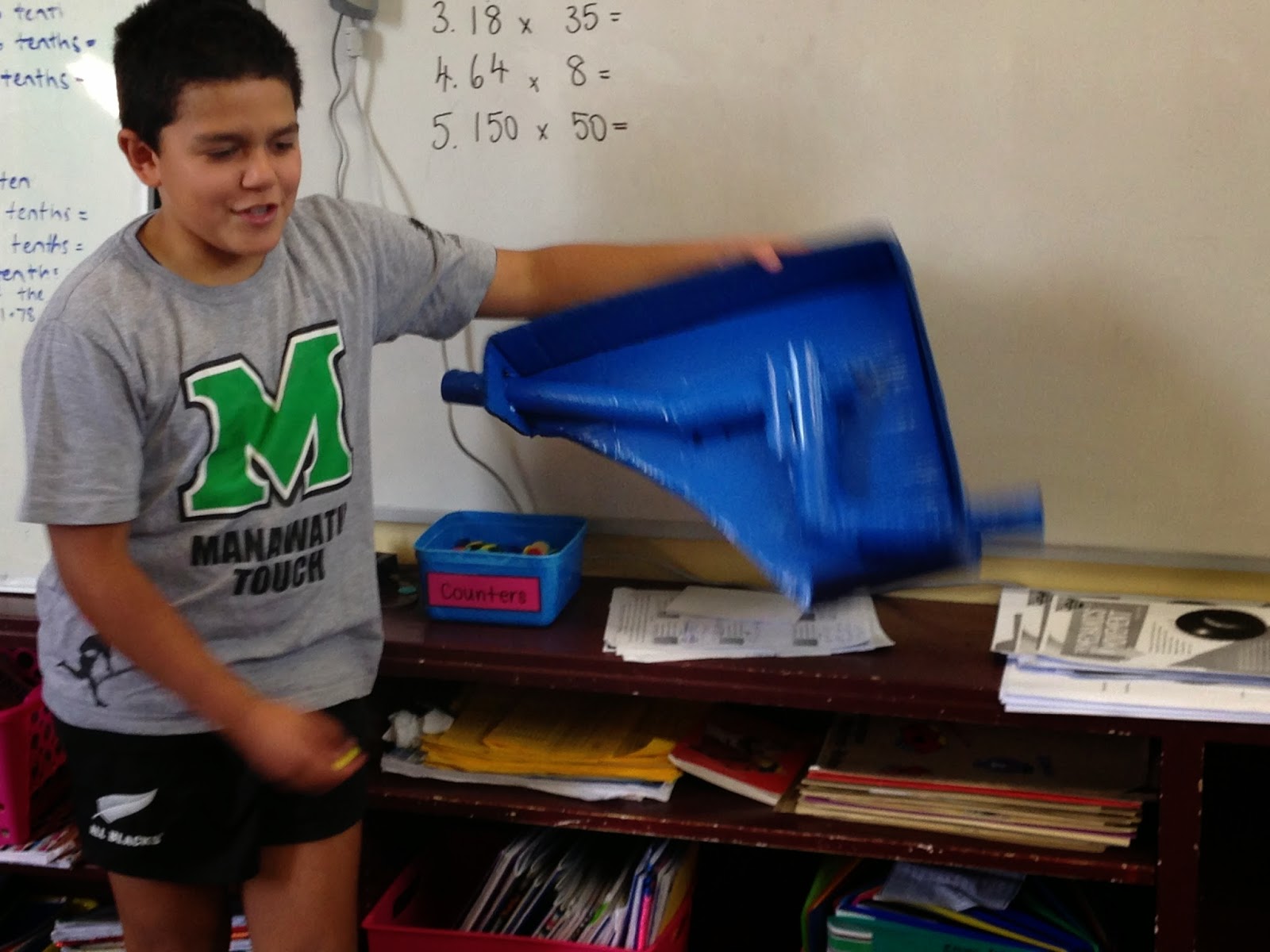
Tamati took his marble run to the next level by spray painting it blue!


The children showed a lot of creativity to build some amazing marble runs. 
 Stay tuned as we look to join them together on our classroom wall.


#wethinklikescientists


Thursday, 14 August 2014

The Forces Challenge

To check our classes prior knowledge and new learning on forces we set them a challenge to build a creation that demonstrates two forces. They were only allowed to use set materials; A4 card x 4, Cellotape 30cm, String x 1m, Paperclips x 10, Toy car x 2, Straws x 4 and Rubber bands x4.


The children set about testing and playing with the materials before deciding on a plan. The discussion was rich with scientific knowledge being bantered about like they were seasoned scientists and designers.


Once they had finalised their plans they set about building their creations and testing them to make sure they worked.


Finally the groups demonstrated their creations to the class and explained the forces that were evident.


#wethinklikescientists

Friday, 25 July 2014

Co2 filled Balloon experiment

Co2 filled Balloon experiment

Materials:
Baking soda
Vinegar
Beaker
Balloon
Measuring flask


Instructions:
First you pour the vinegar and baking soda into the beaker very  quickly. Next swiftly put the balloon on top of the beaker.

Hypothesis:
The balloon will blow up from the gas.


Result:
The vinegar and the baking soda reacted which caused the balloon to inflate.


We thoroughly enjoyed being scientists. Forming and testing our hypothesis.


#wethinklikescientists

Friday, 18 July 2014

Baking Soda extinguisher

After successfully completing the Baking Soda Balloon experiment and reflecting on how/why the experiment worked the children were asked to form a hypothesis on a new experiment. 


What You Need:
baking soda
vinegar
candle
plate
glass
food colouring

What To Do:
1. Add enough water to fill the bottom of the plate.

2. Put 3 or 4 drops of food colouring into the water and mix it up.

3. Place the candle in the middle of the plate.

4. Light the candle. 

5. Take the glass and place it over the lit candle. 


Aric and Nikos thoroughly enjoyed the hands on experiment!


Children then thought about what invisible gas is inside the glass. What happens to the water level inside the glass? What happens to the flame on the candle?


Using their prior knowledge of Co2 gas the majority of the children predicted that the flame would go out and the water level would rise.


#wethinklikescientists